What custom business software is
Custom business software, also called bespoke software, is a system designed for the processes of one particular company. Instead of adapting the company to a generic tool that thousands of businesses use the same way, the tool adapts to the company.
It does not mean building everything from scratch. Good custom development reuses proven pieces (authentication, payments, email, cloud storage) and focuses effort on what is specific to the business: its rules, its approval flows, its calculations and the way its data relates.
Nor is it the same as "configuring" an off-the-shelf program. Configuring means choosing among the options the vendor planned for. Real customization means deciding which options exist.
Types of custom business software
Almost everything built custom for a company falls into one of these categories:
Internal management systems
Operations, inventory, orders, production, scheduling or resources. They replace spreadsheets and processes that live in emails and messages.
Portals
Spaces where customers, suppliers or employees handle tasks on their own: checking an order status, downloading documents, booking an appointment or uploading information.
Dashboards
They gather data from several sources in one place so you can decide with up-to-date information, without building reports by hand every week.
Workflow tools
Approvals, requests, reviews and tasks with clear statuses and a record of who did what.
SaaS platforms
Digital products a company offers to others, with accounts, roles, subscriptions and billing.
Integrations
The piece that connects the tools you already use (ERP, CRM, online store, payments) so data travels on its own.
Often a project combines several: an internal system with a customer portal and a dashboard for management.
How it differs from off-the-shelf software
The difference is not only technical. It changes who decides how your operation works:
| Aspect | Off-the-shelf software | Custom business software |
|---|---|---|
| Processes | You adapt to the product's | The system follows yours |
| Features | Many, of which you use a part | The ones you need, in phases |
| Integrations | What the vendor offers | What your operation requires |
| Evolution | According to the vendor's roadmap | According to your priorities |
| Cost | Recurring licenses, often per user | Development investment, plus hosting and maintenance |
| Ownership | You use the product | The code can be yours (depending on the contract) |
Neither option is better in the abstract. If your need is common, an existing tool is usually the best starting point. We explain it in more detail in custom software vs. off-the-shelf software: how to choose.
When it makes sense for your company
These are the clearest signs that it is worth evaluating:
- 1.Your operation lives in spreadsheets. Several people edit the same file, nobody knows which version is the right one and mistakes are found late.
- 2.You keep parallel processes to cover what your current system does not do.
- 3.Your business rules are your own: prices per customer, approvals by amount, product combinations or calculations no tool handles well.
- 4.Your data is scattered across systems that do not talk to each other, and building a report takes hours.
- 5.Licenses grow every year with the number of users, to use a fraction of the features.
- 6.Your process is your advantage. If the way you work sets you apart from competitors, a generic tool makes it the same as everyone else's.
- 7.You want to launch a digital product of your own for your customers.
And when it does not make sense: if an existing tool covers almost everything you need, if the process is standard (accounting, payroll, email) or if you are not yet clear on how it should work. In that last case, the process has to be put in order first.
Two real examples
The projects we publish in our portfolio show well what "custom" means in practice.
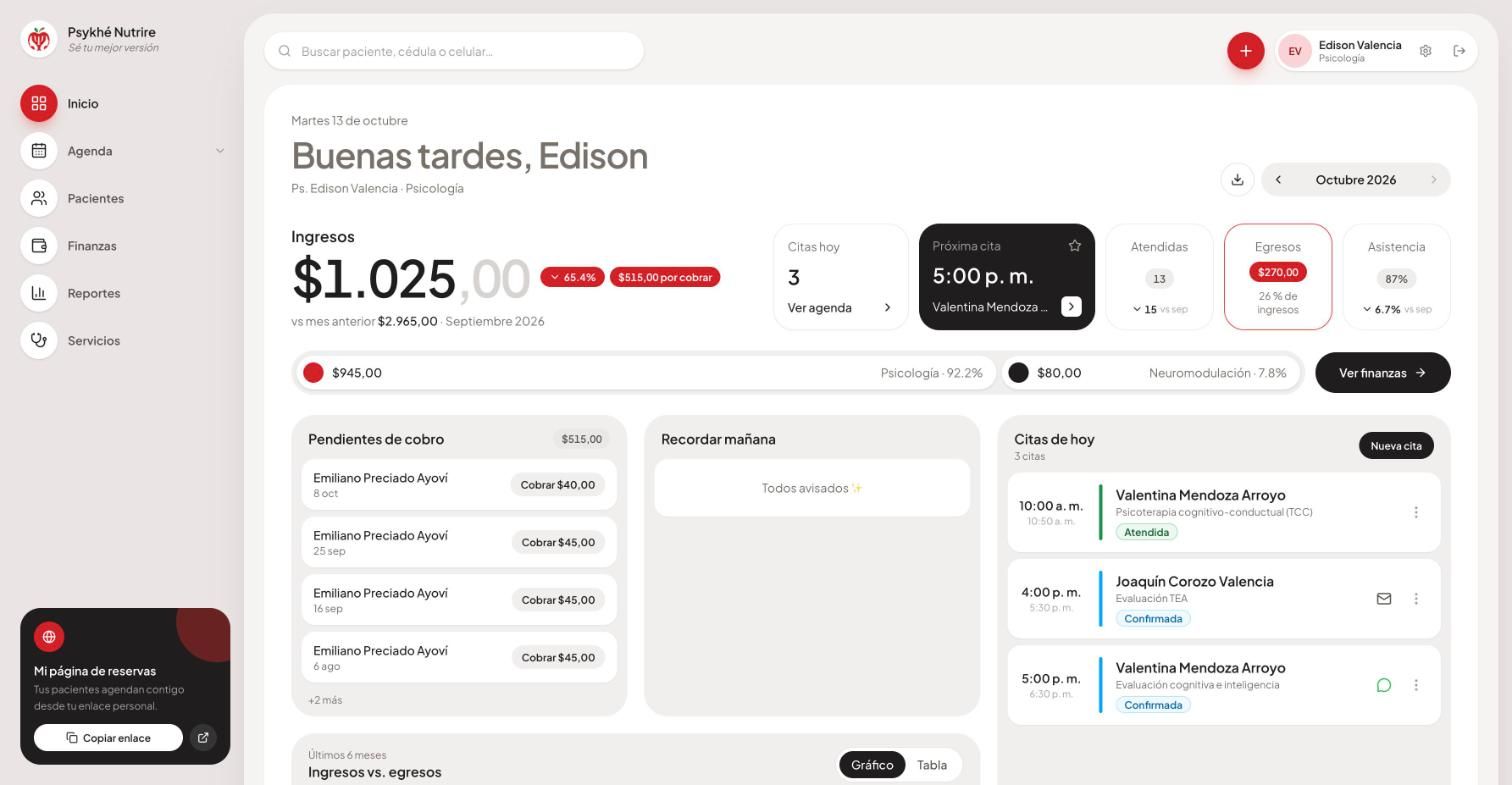

A psychology and nutrition practice. At Psykhé Nutrire, two professionals needed to leave spreadsheets and scattered messages behind to manage scheduling, patients and finances. The key rule was not solved by any generic scheduler: each professional can only see and modify their own patients, appointments and payments. The system enforces that isolation on the server, not in the interface, and records which version of the privacy notice each patient accepted when booking.
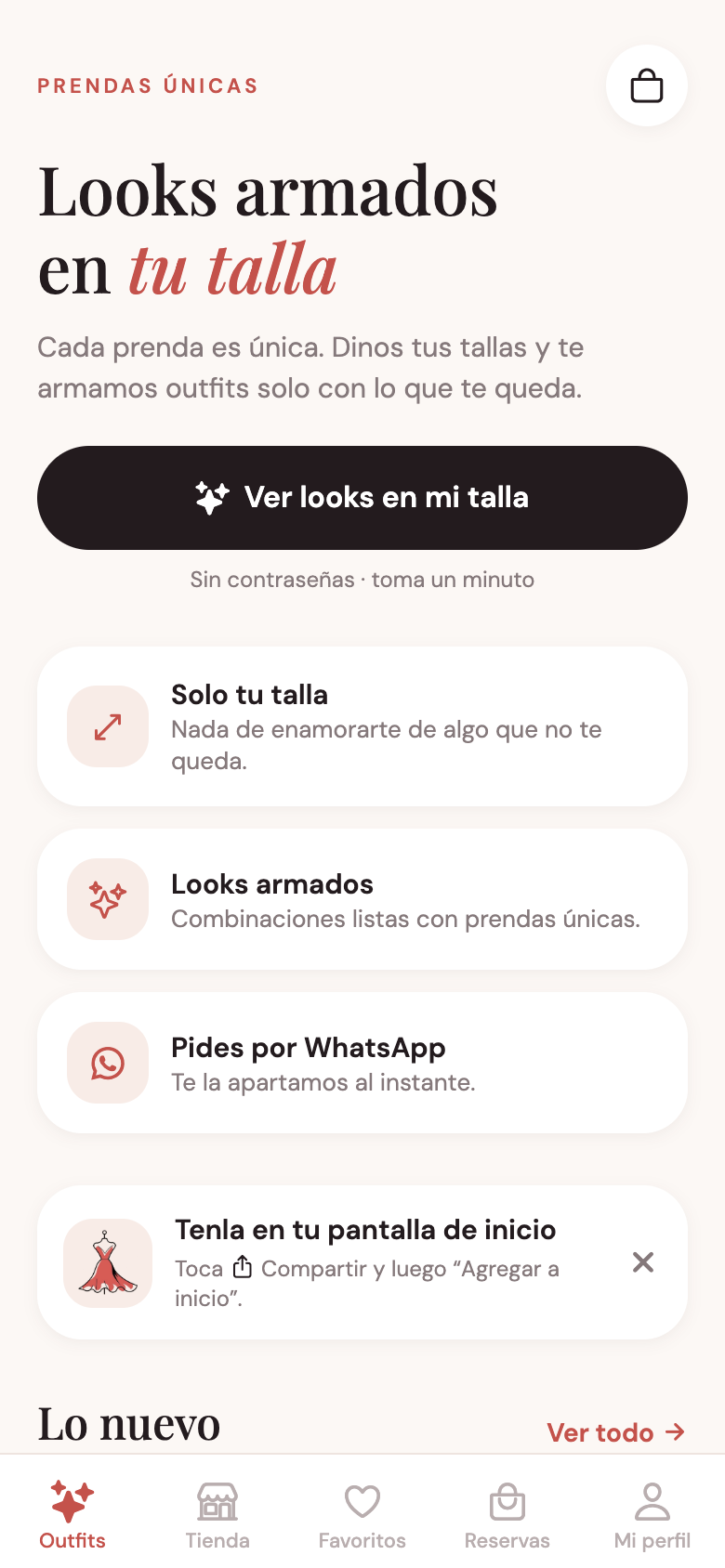
A store of one-of-a-kind pieces. At Dybri Store every garment exists only once and sales are closed over WhatsApp. A standard catalog does not stop two people from ordering the same garment at almost the same time. The app holds the garments at the moment of the order, and if the sale is not confirmed within 24 hours the hold expires and the garment goes back to the store.
In both cases, what is "custom" is not the interface: it is the business rules brought into the system.
How to build it without the project getting out of hand
The biggest risk of custom software is not technical, it is scope. This is how we reduce it:
The problem
How the team works today and what a good result would be
First version
Only what adds the most value
Architecture
Data, role-based permissions and server-side security
Phased deliveries
Short cycles you can see and test
Changes in time
They are caught while still cheap
Adjust
Tests and documentation
The system does not depend on one person
Start with the problem, not the screens
Before designing anything, you map how the team works today, where time or information is lost and what a measurable good result would be.
Define a limited first version
You prioritize what adds the most value and leave the nice-to-haves for later phases. A useful first version in production teaches more than a hundred-page requirements document.
Design the architecture to grow
A well-thought-out data model, role-based permissions from the start and security enforced on the server avoid costly rewrites later.
Build in phases, with reviewable deliveries
Short cycles in which you can see and test progress. Changes are caught while they are still cheap.
Document and test
Automated tests where they add value and technical documentation, so the system does not depend on a single person and can be maintained by our team or yours.
What to agree on before starting
- Code ownership: the source code, documentation and intellectual property should be in your company's name, in writing.
- Repository access from day one.
- Explicit scope: what goes into the first version and what stays out.
- Hosting: which cloud or infrastructure the system will live on and who manages it.
- Maintenance: who fixes bugs, applies security updates and evolves the system after launch.
- Confidentiality: a non-disclosure agreement (NDA) if you will share sensitive information.
Frequently asked questions
Are custom business software and bespoke software the same thing?
Yes. They are two names for the same thing: software built for the processes of one specific company. You will also hear "custom software development for businesses".
How much does it cost?
It depends on scope, the complexity of the business rules, integrations and platforms. In our guide on how much custom software costs to build we explain the factors that weigh most and what a good quote should include.
How long does the first version take?
It depends on the features. As a reference, an MVP usually takes between 6 and 12 weeks; during the definition phase we agree on what goes into that first version.
Can it integrate with the systems we already use?
Yes. It is one of the most common reasons to build custom: connecting the new system with your ERP, CRM, online store or payment gateway, or extending an existing system instead of replacing it. We cover it in detail in our guide to business process automation.
What if we want to change vendors later?
If the code is yours, documented and you have repository access, another team can pick up the work. That is why it pays to put those points in writing from the start.
Conclusion
Custom business software makes sense when your processes are part of your advantage, when your data is scattered or when generic tools force you to work worse. The key is to start with the problem, build a limited first version and grow in phases.
At Devecu we design and build custom software: internal systems, portals, dashboards and SaaS platforms that adapt to how your company works. If you have a process that no longer fits in a spreadsheet, tell us about your project.